The long awaited trip to Greece is almost here! We leave very soon for the island of
Mykonos!
Can't wait to arrive and enjoy our family time in such a fabulous location.
The day we arrive we'll be battling jet lag and getting acclimated, buying supplies (like much needed coffee!) etc. And we have dinner lined up at a place near our airbnb called NIKOS GALLOP.
BUT the next morning we are headed into Mykonos Town! There, we'll explore the town, shop, stroll, see windmills and amazing views and have lunch.
SHOPPING
We are heading into Mykonos Town!
The streets of Axioti, Sourmeli and Agiou Louka are best for experiencing the main restaurants and shops of the island. What are some things to look for in Mykonos shopping wise? I did a bit of investigation, and (at least for ME) these items sound interesting:
*All things GREEK EVIL EYE (MATI)

So apparently all over Mykonos you can find items with the above image. According to one website:
Evil eye is believed to be a curse that is given by a glare that has negative intensions. Any negative emotion can cause the evil eye (mati) curse, such as anger or even jealousy. It is believe that the curse itself causes bad things to happen to the person who has received the curse, such as headaches and even a string of “bad luck”.
***Wearing a special evil eye charm, also called a mati, is said to help prevent the curse from even happening.
There is even an online store that just sells Mati items:
http://www.greekmatistore.com/%5CindexTATA.asp
The GREEK Evil Eye Pendants or the "mati" (greek means of “eye”) protects against the ills brought on by envious and greedy eyes.
But there are bags, towels, jewelry, stationary etc. that are for sale with the Mati on them. Should be fun deciding on which one to purchase!
*LEATHER SANDALS
I hope to find THE perfect pair of Greek made leather sandals! They are known for their quality in Mykonos, and I'm going to THIS store in Mykonos town to try my luck:
https://www.liontis-sandals.gr/index.php?sess=0vu1hbb1geogtu96e4reuhdnh2
Thought these were adorable:
![0100 Φυσικό [110100]](https://www.liontis-sandals.gr/thumb/phpThumb.php?src=../images/products/1365520110_DSC_0042.JPG&w=400&h=300&far=C&q=99&bg=fcfcfe&& "0100 Φυσικό [110100]")
And how beautiful is the storefront itself?
![Κεντρικό Banner Slide 1 [550xX]](https://www.liontis-sandals.gr/thumb/phpThumb.php?src=../images/banners/1361455122_flash1.jpg&w=760&h=300&far=T&bg=ffffff&q=99 "Κεντρικό Banner Slide 1 [550xX]")
Another recommended shop is:
https://www.mykonos-sandals.gr
And there are many other kiosks that sell leather goods as well.
*Olive Oils and Honey
There's supposed to be a great little market near the windmills called Savvas that carries these items (and many others). These would be great to purchase as gifts to bring home! Our winery that we are visiting on Friday also sells their own honey.
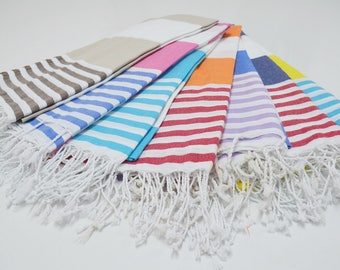
*Turkish Towels
My friend Denise was in Mykonos a year or so ago, and she raved about the turkish towels she bought there (and wished she had gotten more) that are sold many places around the island. So I'll be on the lookout to get her some as well as snag a few for myself. These are made from some of the highest quality cotton in the world and are absorbent but thin (i.e. take up less room) and they dry very quickly (so don't get that mildewy smell of traditional towels over time).
Great article about them: https://www.apartmenttherapy.com/what-the-internet-is-saying-about-turkish-towels-224777
*Weaving items
There is an ancient tradition in Mykonos with weaved goods such as: beautiful and colorful hats, shawls scarves, blankets and other clothing.
Currently there is only one person who crafts these items by hand and has done so for decades, and her name is: Nikoleta Xidabis
Here is a blog about her: http://villahurmuses.com/weaving-traditions-mykonos/
She has a shop in town, and I'm excited to peruse her goods.
Here she is at work:

*Petros the Pelican souvenirs
As I mentioned in the first post, Petros became the mascot of Mykonos, but sadly he was killed by a car in 1985. His image however is all over the town and therefore much memorabilia features his image.
Can't wait to share my purchases and finds next week!
EATING
Can't wait to eat fresh food and sample local delicacies while in Mykonos and Santorini!
There are SO many great restaurants here and they also apparently have some fabulous Italian spots such as: https://dangelo.com.gr
But don't forget gyros (street food is plentiful to grab one for lunch), gelato and seafood.
Fresh fish can be very expensive in Greece (especially on these two islands), but a few tips:
Always be sure to ask the price of any fish selection before ordering so you're not shocked when you get the bill. They are used to weighing and pricing different fish options so you will know the cost before ordering. A seafood place near where we are staying is https://www.nammos.gr/restaurant
Different seafoods in Greece include:
ACHINOS - Sea Urchin
ASTAKOS - European Lobster
ATHERINA - Mediterranean Sand Smelt
AVGOTARACHO - Greek Bottarga (the cured eggs of flathead grey mullet)
BAKALIAROS - European hake
BAKALAOS - Atlantic cod
BARBOUNI - mullet
FAGRI - sea bream
GALEOS - school shark
GARIDA - shrimp or prawns
GAVROS - anchovy
GYALISTERES - smooth clams
KALAMARI - squid
KARAVIDA - crawfish
KAVOURI - crab
KEFALOS - striped mullet
KIDONI - cockle, clam
KOLIOS - mackerel
KOUTSOMOURA - striped red mullet
LAVRAKI - bass, sea bass
MADRIDA - picarel, whitebait
MELANOURI - saddled sea bream
OCTOPUS (HTAPODI) - common octopus
MYDI - mussel
PALAMIDA - Atlantic bonito
PESKANDRITSA - monkfish
PESTROFA - trout
PINNA (DO NOT CONSUME - ENDANGERED!) - noble pen shell
ROFOS - dusky grouper
SALAHI - skate
SARDELA - sardines
SARGOS - white sea bream
SFIRIDA - sargo - white sea bream
SINAGRIDA - common dente
SKAROS - parrotfish
SKORPINA - scorpionfish
SOUPIA - cuttlefish
TARAMA - fish roe
THRAPSALO - flying squid
TONOS - tuna
TSIPOURA - gilt head sea bream
XIFIAS - swordfish
Other Greek classic dishes to try include:
*Moussaka - baked eggplant with béchamel

*Pastitsio - similar to lasagna

*Souvlaki - meat and veggies are grilled on a skewer

*Gyros - roasted meat and veggies are served with tzatziki on pita bread

*Kopanisti - cheese known for it's spicy taste

*Ksinotira - a local favorite appetizer
*Louza - a dish made with thin sliced pork

DESSERTS: The most popular are:
Baklava

Bougatsa - a kind of sweet pie made of phyllo pastry and semolina custard often served for breakfast

Ghalatoboureko - custard in a crispy phyllo shell

Loukoumia - a chewy candy dusted in powdered sugar that is the Greek version of "Turkish Delight". This rubbery-texturedcandy is extremely popular throughout Greece. It is made from gelatin or cornstarch, sugar, honey and fruit juice or jelly, and is often tinted pink or green. (If this candy sounds familiar, it was mentioned in The Lion, Witch and the Wardrobe by C. S. Lewis as Edmund's temptation in Narnia.)


Loukoumades - fried donuts garnished with honey, sesame seeds, and dried fruit

COFFEE
Ellinikos - THE most favorite style of coffee in Greece. It's served in long-handled coffee copper pots. 3 different kinds areVari Glyko (Strong and honey sweetened), Metrios (medium sweet) and Sketos (without sugar)

BUT - - - I am dying to try a FREDDO (Greek Iced Coffee) that you can find all over the country. From Greekreporter.com:
Frappé is a foam-covered iced coffee drink made from instant coffee, water, ice cubes and sugar (or sometimes even ice-cream). Accidentally invented in 1957 by Dimitris Vakondios during the International Trade Fair of Thessaloniki, the Frappé is still very popular in Greece and Cyprus, and is available at virtually every single Greek café. Made either with a shaker or a special mixer, the Frappé is one of the easiest-to-make coffee drinks available.
Freddo, on the other hand, comes in two different variations: Freddo Espresso and Freddo Cappuccino.
Freddo Cappuccino is the iced version of the regular cappuccino coffee, and it usually has a small amount of cold frothed milk (afrogala in Greek) on top of it. Apart from Greece, this drink is widely popular in Cyprus and parts of Italy, as well.
Freddo Espresso is the cold version of espresso coffee, and it is made with a double shot of espresso coffee mixed in a mixer with ice cubes. Particularly popular among those who prefer a cold and strong coffee, the Freddo Cappuccino has become the most widely consumed coffee in Greece over the past ten or so years.
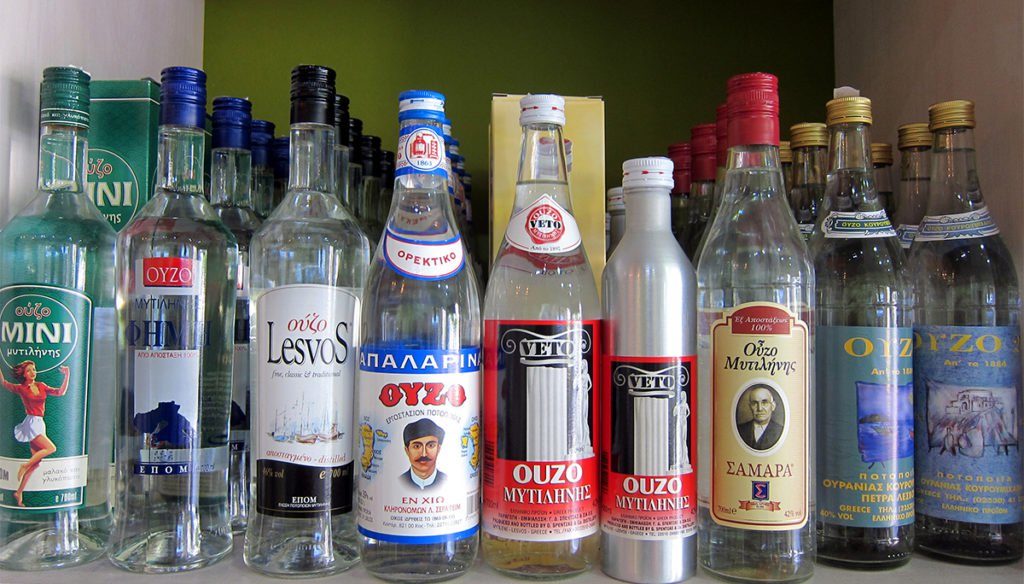
There are many Greek wines, but I thought I'd write about the one drink that comes to mind immediately when I think of Greece - OUZO!
I was talking to my nephew Hank recently (who we are traveling with and whom had not heard of Ouzo before), so I decided to research a bit.
What is OUZO? It's an anise flavored alcoholic drink - think absinthe or licorice flavor. It's made from a base spirit of grape skins before being flavored with anise.
The first ouzo distillery was opened in 1856, and the drink can only be made in Greece receiving the EU-approved protected designation of origin (similar to Italy's wine DOCs).
The recommendation is to SIP ouzo with food like cheese or stuffed grape leaves (say as an appetizer). And when you add water to it it gets a milky look. OR you can serve it in a cocktail such as:
THE GREEK TRAGEDY
3/4 oz Ouzo
3/4 oz Sweet Vermouth
3/4 oz Sweet Berry liqueur (or Manischewitz)
Squeeze of lime juice
And from Greek City Times I found a list of "Dos and Don'ts" when it comes to drinking Ouzo:
We leave in a few short days - off to pack (and pare down what I've initially set out!) for the trip.
I'll be blogging as I go throughout our fabulous 7 days in Greece! Until then...
Ellinikos - THE most favorite style of coffee in Greece. It's served in long-handled coffee copper pots. 3 different kinds areVari Glyko (Strong and honey sweetened), Metrios (medium sweet) and Sketos (without sugar)

BUT - - - I am dying to try a FREDDO (Greek Iced Coffee) that you can find all over the country. From Greekreporter.com:
Frappé is a foam-covered iced coffee drink made from instant coffee, water, ice cubes and sugar (or sometimes even ice-cream). Accidentally invented in 1957 by Dimitris Vakondios during the International Trade Fair of Thessaloniki, the Frappé is still very popular in Greece and Cyprus, and is available at virtually every single Greek café. Made either with a shaker or a special mixer, the Frappé is one of the easiest-to-make coffee drinks available.
Freddo, on the other hand, comes in two different variations: Freddo Espresso and Freddo Cappuccino.
Freddo Cappuccino is the iced version of the regular cappuccino coffee, and it usually has a small amount of cold frothed milk (afrogala in Greek) on top of it. Apart from Greece, this drink is widely popular in Cyprus and parts of Italy, as well.
Freddo Espresso is the cold version of espresso coffee, and it is made with a double shot of espresso coffee mixed in a mixer with ice cubes. Particularly popular among those who prefer a cold and strong coffee, the Freddo Cappuccino has become the most widely consumed coffee in Greece over the past ten or so years.
Adding vanilla or a liquor is another delicious option!

DRINKS
There are many Greek wines, but I thought I'd write about the one drink that comes to mind immediately when I think of Greece - OUZO!
I was talking to my nephew Hank recently (who we are traveling with and whom had not heard of Ouzo before), so I decided to research a bit.
What is OUZO? It's an anise flavored alcoholic drink - think absinthe or licorice flavor. It's made from a base spirit of grape skins before being flavored with anise.
The first ouzo distillery was opened in 1856, and the drink can only be made in Greece receiving the EU-approved protected designation of origin (similar to Italy's wine DOCs).
The recommendation is to SIP ouzo with food like cheese or stuffed grape leaves (say as an appetizer). And when you add water to it it gets a milky look. OR you can serve it in a cocktail such as:
THE GREEK TRAGEDY
3/4 oz Ouzo
3/4 oz Sweet Vermouth
3/4 oz Sweet Berry liqueur (or Manischewitz)
Squeeze of lime juice
And from Greek City Times I found a list of "Dos and Don'ts" when it comes to drinking Ouzo:
- Do enjoy it on a hot, sunny, late afternoon or at an early evening happy hour.
- Do drink it cold, but don’t refrigerate it. Place one or two ice cubes in a small glass. Pour a small amount of ouzo over the ice. The ouzo will turn from clear to cloudy as the anise reacts with the ice. Or, pour a small amount of ouzo into a glass, neat, then add a splash of very cold water in lieu of ice.
- Don’t do ouzo shots! This is defeating the whole purpose, and the resulting drunk will be the worst you’ve ever experienced – not to mention producing the most vicious hangover ever.
- Do drink it accompanied by a small plate or two of mezedes– the Greek version of tapas. Always drink it with food. Ouzo is VERY strong; drinking it on an empty stomach isn’t a good idea. The Greeks take pride in pairing and serving specific types of mezedes with ouzo, such as grilled octopus, prawns, or squid; cheese and meat platters, or other “little bites.” There are even special establishments called “ouzeries” dedicated solely to this practice.
- Do sip it slowly. Don’t gulp it down. Ouzo is meant to be savoured; the ritual of ouzo and mezedes is meant to be relaxing, and the process should be enjoyed for two hours or more.
- Don’t drink ouzo as an aperitif (before dinner), digestif (after dinner), or during dinner. The taste doesn’t complement traditional Greek entrees. With meals, the Greeks drink either wine, beer, or soft drinks, and always, bottled table water.
- When in Greece, do sample top-notch island brews (rely on local knowledge to steer you right) or widely available Plomari and Ouzo Mini, which are on store shelves everywhere.
- Finally, to fully enjoy and savour not only the drink itself, but the cultural ritual of drinking it,absolutely do drink ouzo — the Greek way!
We leave in a few short days - off to pack (and pare down what I've initially set out!) for the trip.
I'll be blogging as I go throughout our fabulous 7 days in Greece! Until then...
Ya Mas!!!


No comments:
Post a Comment